Detroit
Silent SpringDetroit appears in Silent Spring as a city where the postwar expansion of chemical pest control became a direct, local experience. In the fall of 1959, an aerial aldrin treatment covered about 27,000 acres in southeastern Michigan, including numerous Detroit suburbs. The ensuing reports of sick and dying animals and ill residents turned an abstract debate about pesticide hazards into a visible public-health and wildlife crisis.
Setting and the spraying campaign
The operation unfolded amid the broader spread of long-lasting pesticides after the war. Rachel Carson and colleagues in government service had become alarmed by the use of DDT and other persistent poisons in agricultural control programs. When Carson concluded that the chemicals were destroying wildlife and habitat and endangering people, magazine publishers declined to carry her proposed article, with some fearing that criticism would unsettle advertisers. The Detroit episode belongs to this larger history: chemical control had moved beyond fields and forests into towns and cities.
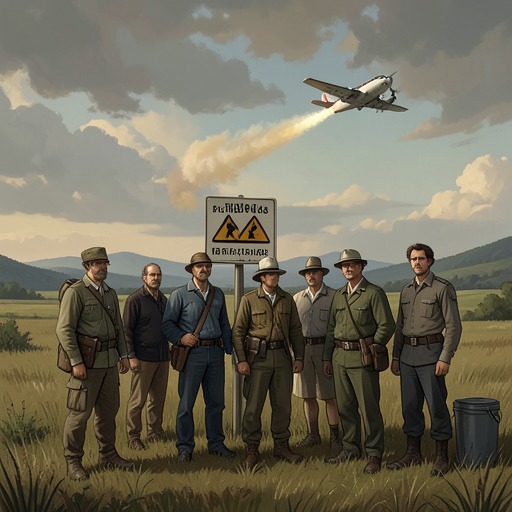
In the fall of 1959, planes dusted roughly 27,000 acres of southeastern Michigan with pellets of aldrin, a highly dangerous chlorinated hydrocarbon. The operation included numerous suburbs of Detroit. It proceeded under a Michigan pest-control law that permitted indiscriminate spraying without notifying or obtaining permission from individual landowners. The low-flying planes therefore brought the treatment into populated areas without residents’ individual consent.
Immediate effects on animals and residents
Within days of the dusting, the Detroit Audubon Society began receiving calls about birds. Residents reported birds dying around their homes and feeders; birds found alive displayed tremors, inability to fly, paralysis, and convulsions characteristic of insecticide poisoning. A local veterinarian, meanwhile, found his office full of clients whose dogs and cats had suddenly become ill. Cats seemed especially affected, consistent with their habitual grooming and licking of their paws and coats.
The exposure also prompted complaints of throat and chest irritation. A prominent Detroit internist was called to treat four patients within an hour after they had watched the planes at work. All experienced a similar cluster of symptoms: nausea, vomiting, chills, fever, extreme fatigue, and coughing. The reported illness followed the spraying, while some local explanations dismissed the connection or attributed the symptoms to something else. The convergence of animal poisonings and human complaints made the campaign difficult to regard as a remote or purely agricultural intervention.
A city within a wider environmental argument
Carson presents Detroit not as an isolated mishap but as one instance of a larger pattern: lethal chemicals were being distributed over extensive areas, while towns and cities as well as forests and cultivated fields were exposed to fallout. The Detroit reports gave that pattern a local scale—birds at feeders, sick household animals, and patients treated after watching the planes—while the breadth of the operation showed how far the consequences could spread.
The city’s place in the book also contrasts with Carson’s account of other approaches to pest management. The Japanese beetle, after spreading through much of its introduced range, had declined by 1945 to minor importance in much of that territory, largely through the introduction of parasitic insects from the Far East and the establishment of disease organisms fatal to it. Set beside the Detroit campaign, that example underscores the difference between chemical eradication and control shaped by biological relations. Detroit thus becomes a concrete measure of the stakes in Carson’s argument: the methods chosen to control pests can affect wildlife, domestic animals, and people living within the treated landscape.